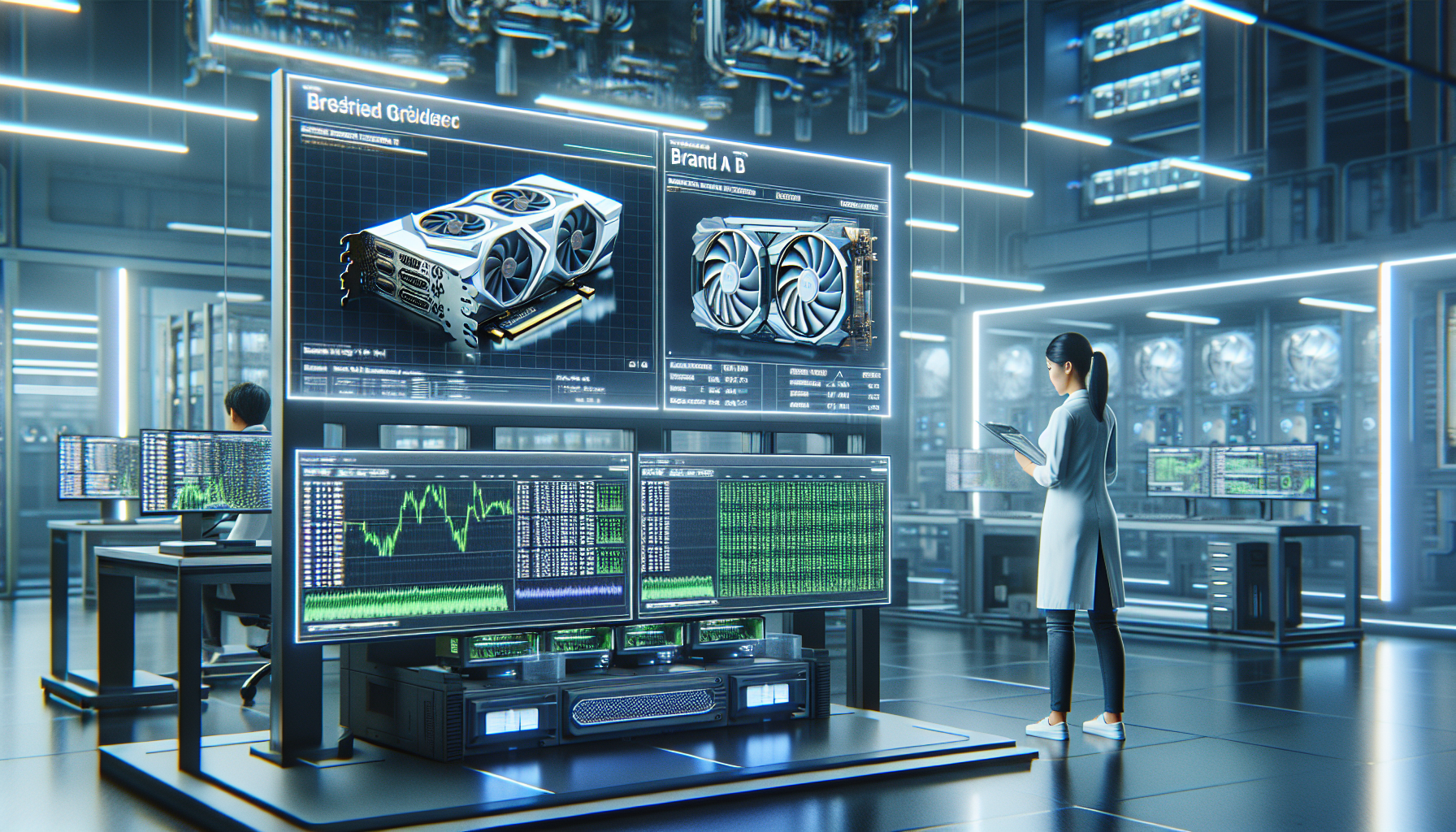
NVIDIA's New GPU Features Compared to AMD's Latest Offerings
In the ever-evolving world of GPUs, NVIDIA and AMD are at the forefront, constantly pushing the boundaries of what's possible. Understanding the key differences between their latest offerings can help you make an informed decision.
Key Takeaways
- NVIDIA's latest GPUs excel in ray tracing capabilities.
- AMD offers competitive pricing with robust performance.
- Both brands are focusing on energy efficiency.
- Real-world use cases highlight varying strengths.
- Benchmark results show differing strengths in specific tasks.
Ray Tracing: A Game-Changer
NVIDIA has long been a leader in ray tracing technology. Their new GPUs continue to enhance this feature, providing more realistic lighting and shadows in games and applications. For developers, this means creating more immersive experiences.
AMD, on the other hand, has improved its ray tracing capabilities significantly. While they may not match NVIDIA's prowess, AMD's GPUs offer a cost-effective solution for those looking to dabble in ray tracing without breaking the bank.
Performance Benchmarks
As of 2023-10, benchmark tests reveal NVIDIA leading in high-end performance, particularly in 4K gaming scenarios. However, AMD's GPUs show exceptional results in tasks like video editing and machine learning applications, thanks to their efficient architecture.
benchmark_tool --gpu nvidia_latest --task render --resolution 4k
Design Innovations and Efficiency
Both companies are making strides in improving energy efficiency. NVIDIA's architecture focuses on maximizing performance per watt, which is crucial for reducing electricity costs and environmental impact.
AMD's latest design innovations focus on smaller form factors, making them ideal for compact builds. This can be particularly beneficial for developers working in constrained spaces.
Common Mistakes
- Overlooking power requirements — Always check PSU compatibility.
- Ignoring cooling solutions — Ensure adequate ventilation.
- Choosing based solely on price — Consider long-term performance needs.
Quick Checklist
- Assess your primary use case (gaming, development, etc.).
- Check compatibility with existing hardware.
- Consider future-proofing with latest features.
- Evaluate energy efficiency metrics.
Vendors Mentioned
- NVIDIA: Leading in ray tracing and high-end performance.
- AMD: Offers excellent value and robust performance for creators.
- Asus: Known for reliable GPU cooling solutions.
- MSI: Offers overclocking-friendly designs.
- Gigabyte: Provides cost-effective options with solid performance.
Further Reading
- "The Future of GPUs: What's Next?" - Tech Today
- "Energy Efficiency in Modern GPUs" - Green Tech Journal
- "Comparing GPU Architectures: NVIDIA vs. AMD" - Hardware Insights